
The Prison Empire of Ukraine. Drug trafficking, torture, extortion, murder, slave labor, and bribery
- Тарас Зозулінський
I.
The Criminal Adventures of the Leaders of the Synelnykove Zone
The deputy escaped jail for influence peddling. The chief moved into public office and he is accused of embezzling prison assets.

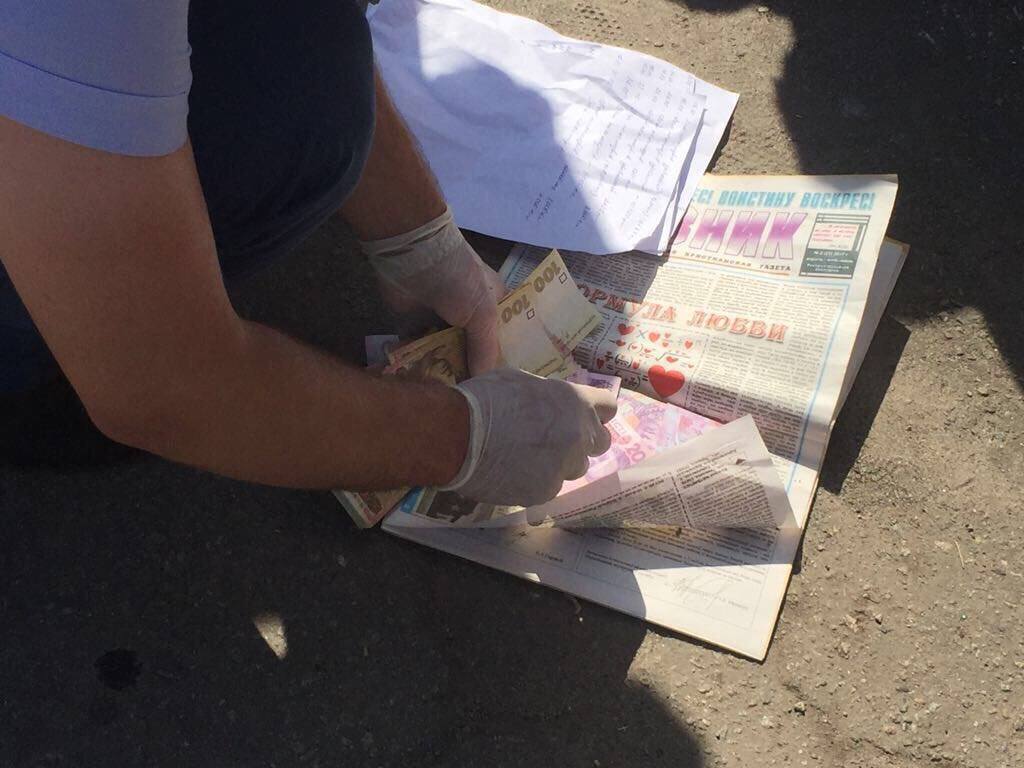
Lieutenant Colonel Hennadii Zinevych stared in despair at the colorful pages of the Christian newspaper "Prisoner", while an SBU undercover officer began counting the marked U.S. dollar bills laid across an illustration of hearts accompanying an article titled "The Formula of Love".
He had other plans for the cash.
Those plans unraveled within seconds. But his anticipated celebration was cut short when military prosecutors and SBU officers, appearing seemingly out of nowhere, surrounded the lieutenant colonel.
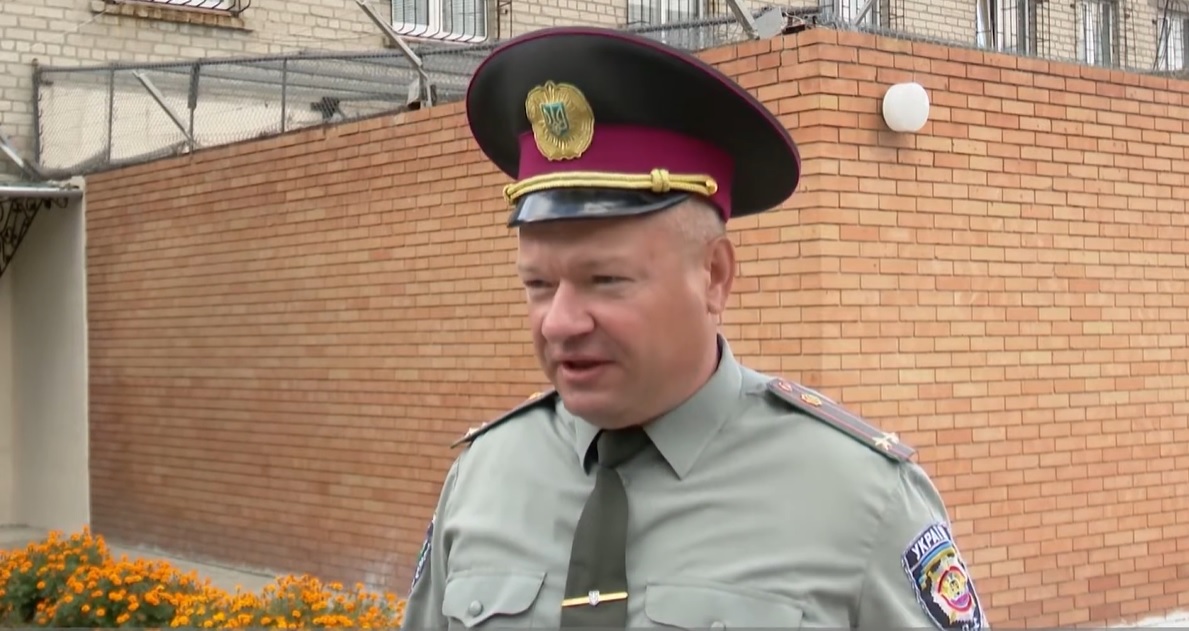
Polished combat boots, a white T-shirt beneath camouflage fatigues, and a military cap swaggeringly cocked at an angle—everything befitted a deputy warden of a correctional colony. This time, however, he was not standing with his head held high. His hands cuffed behind his back, Zinevych gazed silently at the asphalt.
He had been set up by an inmate of the Synelnykove correctional colony and the inmate's acquaintance. According to investigators, the deputy warden had agreed to use his influence to provide the prisoner's early parole in exchange for payment.
When military prosecutors formally notified Zinevych of the charges the following day, his expression probably appeared even more downcast. At the time, he was accused of accepting a bribe as a public official—an offense that, if proven, carried the prospect of property confiscation in addition to a lengthy prison sentence.
The prosecutors began to “hang medals” for themselves and “publicize” the case on social networks - “for the crime committed, the lieutenant colonel, greedy for easy profit, faces up to 10 years in prison.”
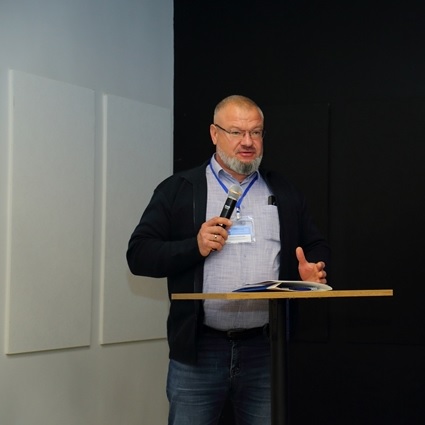
Then, after loudly trumpeting their achievement, law enforcement officers quietly swept the case under the rug аollowing a familiar, well-worn pattern. As a result, Zinevych got off with a fine. His immediate superior, Vasyl Podlesnyi, the head of Synelnykove Correctional Colony No. 94, escaped scrutiny altogether. After remaining in charge of the colony until 2022, he is a senior official in the Synelnykove District State Administration now, in 2026. That, however, has done nothing to prevent him from standing trial in a long-running case involving the embezzlement of the correctional colony's property through abuse of office.
Saving Private Ryan
The performance put on by the Military Prosecutor's Office of the Dnipropetrovsk Garrison deserves a David Copperfield Award. They detained the deputy head of the correctional colony. They served him with a notice of suspicion. A serious crime: bribery under Part 3 of Article 368 of the Criminal Code of Ukraine.
Then came the sleight of hand.
Less than a month later, during the pre-trial investigation, the legal qualification of the offense was changed to Part 2 of Article 369-2 of the Criminal Code of Ukraine.
That is already a medium-gravity offense, one that does not provide for confiscation of property and may be punishable by nothing more than a fine.
And after this wave of the magic wand—and, perhaps, the pleasant rustle of greenbacks in prosecutors' pockets—the bribery suspect Zinevych found himself in the defendant's dock charged exclusively with trading in influence.
The deputy head of the correctional colony admitted committing the offense. Meanwhile, the military prosecutors who had only recently been telling the gullible public about the lieutenant colonel greedy for easy money who was facing ten years behind bars, entered into a plea agreement with that very same lieutenant colonel, agreeing on a sentence in the form of a fine. The court said okay, and the deputy head of the correctional colony got off with a fine of UAH 25,500.
Zinevych sincerely repented for taking money in exchange for exercising influence over a decision to be made by the head of Synelnykove Correctional Colony No. 94. Whether he merely promised the inmate's acquaintance that he would influence the colony governor, Vasyl Podlesnyi, or whether he actually did influence him, the court judgment remains silent. But one thing is known for certain: the head of the colony himself suffered no consequences in this story. Although, judging by the chronology of events, his role should have been the key one.
Want to Get Out? Pay Up
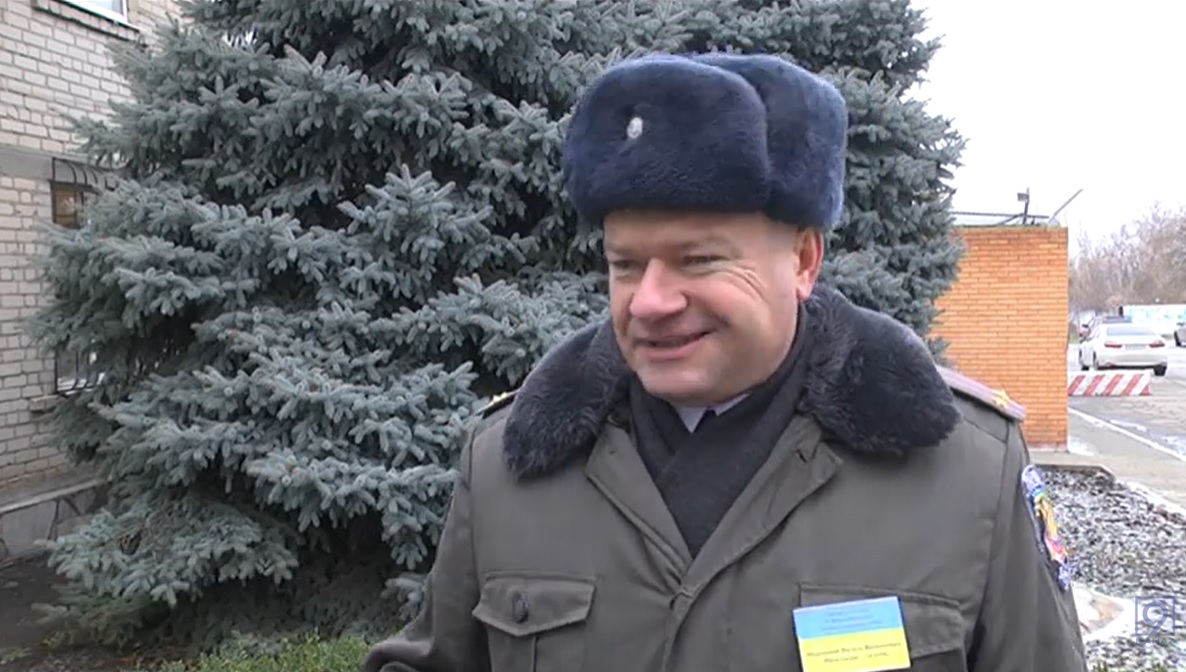
Hennadii Zinevych took the position of deputy head of the correctional colony for social, educational, and psychological work in February 2016.
Exactly one year later, on February 1, 2017, a convicted person arrived at the colony to serve his sentence. He wanted to be released on parole (early conditional release).
It was precisely the responsibility of the head of the colony’s social and psychological service to prepare character references for inmates for consideration of issues related to early conditional release.
After that, the materials were forwarded to the commission of Correctional Colony No. 94, which, together with the supervisory commission, submitted a motion to the court for the application of early conditional release to the convicted person.
That prisoner was frequently visited by a woman who was described in the court verdict as a “family friend.”
On April 6, 2017, inside the colony premises, Hennadii Zinevych offered this woman that, for 16,000 hryvnias, he would arrange with the head of Synelnykove Correctional Colony No. 94 to cancel a previously imposed disciplinary penalty against the inmate and send the documents concerning the application of early conditional release for approval by the supervisory commission.
There were no alternatives — with that active disciplinary penalty in place, early conditional release was simply not an option for the inmate. Therefore, the woman agreed and, already on June 7, brought the money and handed it over to the deputy head of the colony.
From the description of those events, even a schoolchild can understand that Hennadii Zinevych would not have been able to facilitate the inmate’s early release without his boss’s signature removing the disciplinary penalty imposed on the prisoner.
Whatever the case may be, Vasyl Podlesnyi did not become a defendant in this criminal proceeding and continued to keep the colony firmly under his control for another four and a half years.
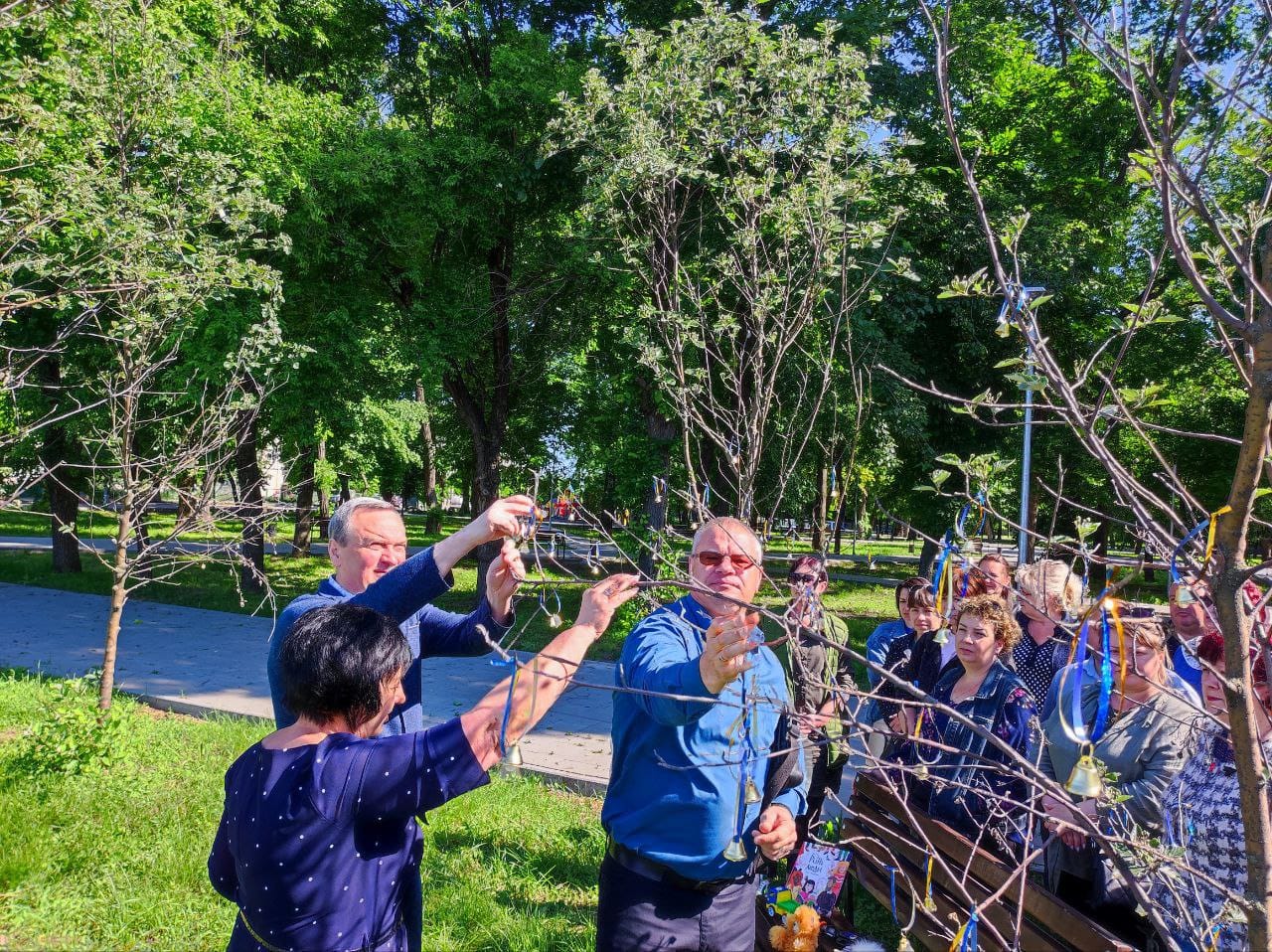
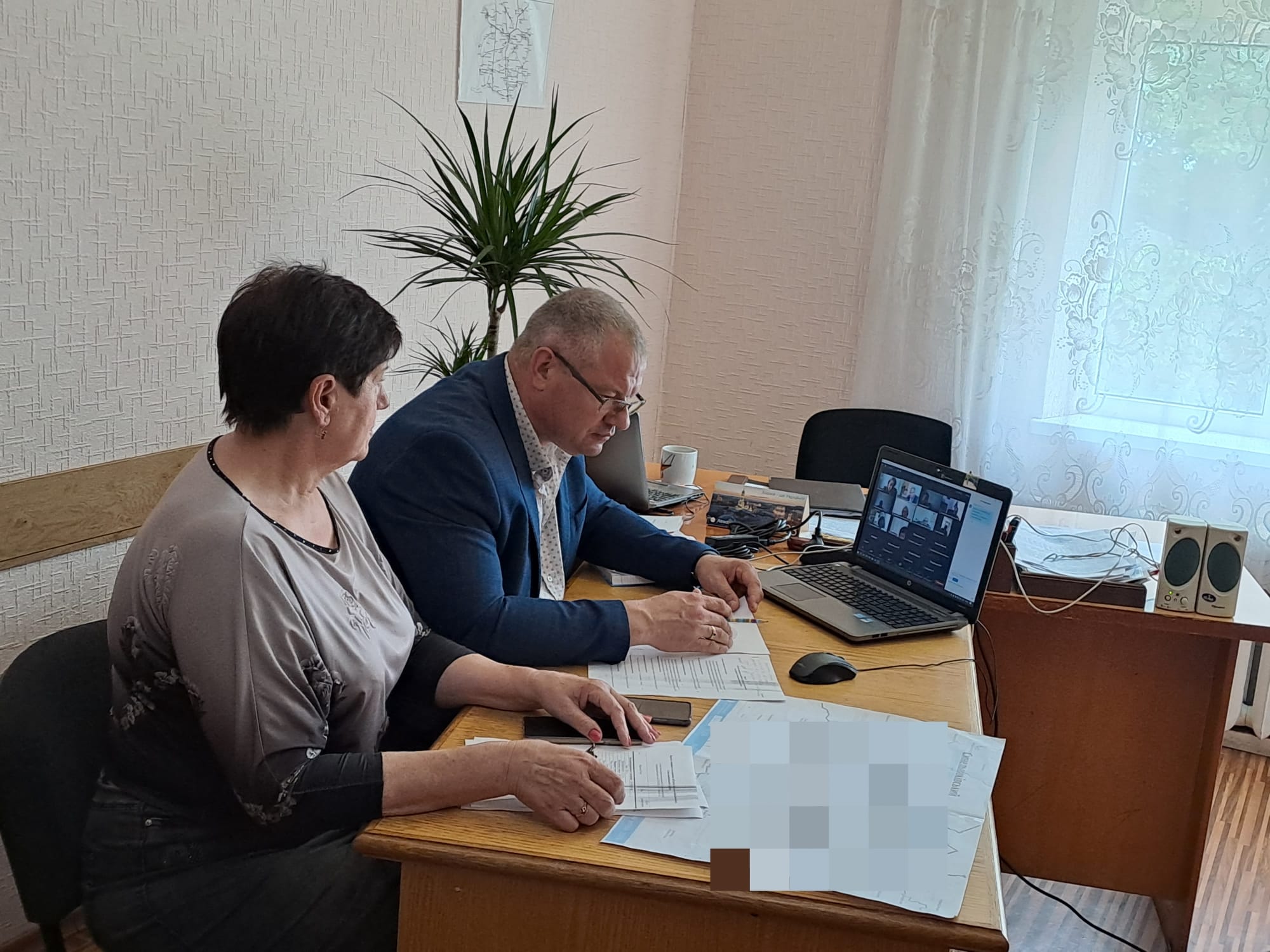
Clearly, the story described above indicates that the head of Synelnykove Correctional Colony knew how to cooperate with law enforcement. Apparently, that is why he later decided to work as head of the Department of Defense Affairs, Civil Protection, and Cooperation with Law Enforcement Agencies of the Synelnykove District State Administration.
A year later, he received a promotion. And since 2023, Podlesnyi has been the deputy head of this administration.
Alongside this, his "blood ties" within the prison remained intact — his wife continues to work at the correctional colony, serving as a Senior Inspector in the Personnel Department.
And if the State Bureau of Investigation is right, the Synelnykove correctional colony still bears substantial traces of its former warden's large-scale embezzlement of colony property.
Today, he stands accused under two articles of the Criminal Code, and the criminal proceedings are being heard by the Synelnykove City District Court. During the pre-trial investigation, Vasyl Podlesnyi was formally notified of suspicion of committing a criminal offense under Part 4 of Article 191 of the Criminal Code. A classic case of penitentiary misconduct — large-scale embezzlement of colony property through abuse of official position, along with the preparation and issuance of knowingly false official documents.
But will the court miss the mark in the case of the "master" of the Synelnykove correctional colony, repeating the prosecutors' "feat" in his deputy's case? It is the directors in robes who will ultimately determine what name society gives to the criminal film they produce.
The inevitability of punishment is a fundamental mechanism of democracy. It is especially important when addressing human rights violations in places of detention. Providing the opening of criminal proceedings over torture, drug trafficking, bribery, and extortion in places of imprisonment is still no guarantee that those responsible will be held accountable. Only a handful of cases make it to court, thanks to the difficult, persistent daily work of human rights defenders who refuse to let flagrant human rights violations be swept under the rug.
A sense of impunity breeds the continuation of cruel treatment by employees of correctional colonies and pre-trial detention сenter (correctional institutions for the detention of suspects and accused persons).
II.
Catch Him If You Can: Pre-Trial Detention Center Employee Suspected of Drug Trafficking Flees Abroad from the SBI (The State Bureau of Investigation)
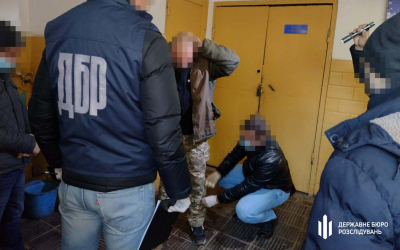
Junior Inspector of the Security and Regime Department at the Bakhmut Pre-Trial Detention Center, Yevhen Rubtsov, came on his regular shift on October 26, 2021. He did not know that this would be the day his life would be turned upside down. For the burly men in SBI vests, the day of reckoning had arrived. Investigators from the State Bureau of Investigation had spent the previous 17 months tracking a cannabis and methadone supply channel and the distribution of narcotics inside the detention facility.
The organized group included three detainees held in the pre-trial detention center. They took "orders" from inmates and passed them on to accomplices outside the facility. According to the SBI, the key role in the scheme was played by a member of the detention center staff who, after receiving the narcotics, smuggled them behind bars and concealed them in a stash.
But Yevhen Rubtsov had no inkling that a special operation was underway. The following day, the SBI would publicize the operation, announcing that the inspector had brought another batch of narcotics to the hiding place. That was when they caught him with the methadone.
For the inspector, the place where he had spent so much of his time had not changed. The only difference was that he now remained there on the other side of the bars, having been taken into custody as a criminal suspect.
But the music did not play for the SBI for long. On November 1, an individual temporarily residing in Zakarpattia posted bail of UAH 68,100 for the detention center inspector. The prison officer walked free.
Just days before the start of the full-scale war, the inspector was served with a revised and new notice of suspicion. Part 3 of Article 307 of the Criminal Code left no room for escaping with a suspended sentence. He was facing 9 to 12 years in prison, along with confiscation of property.
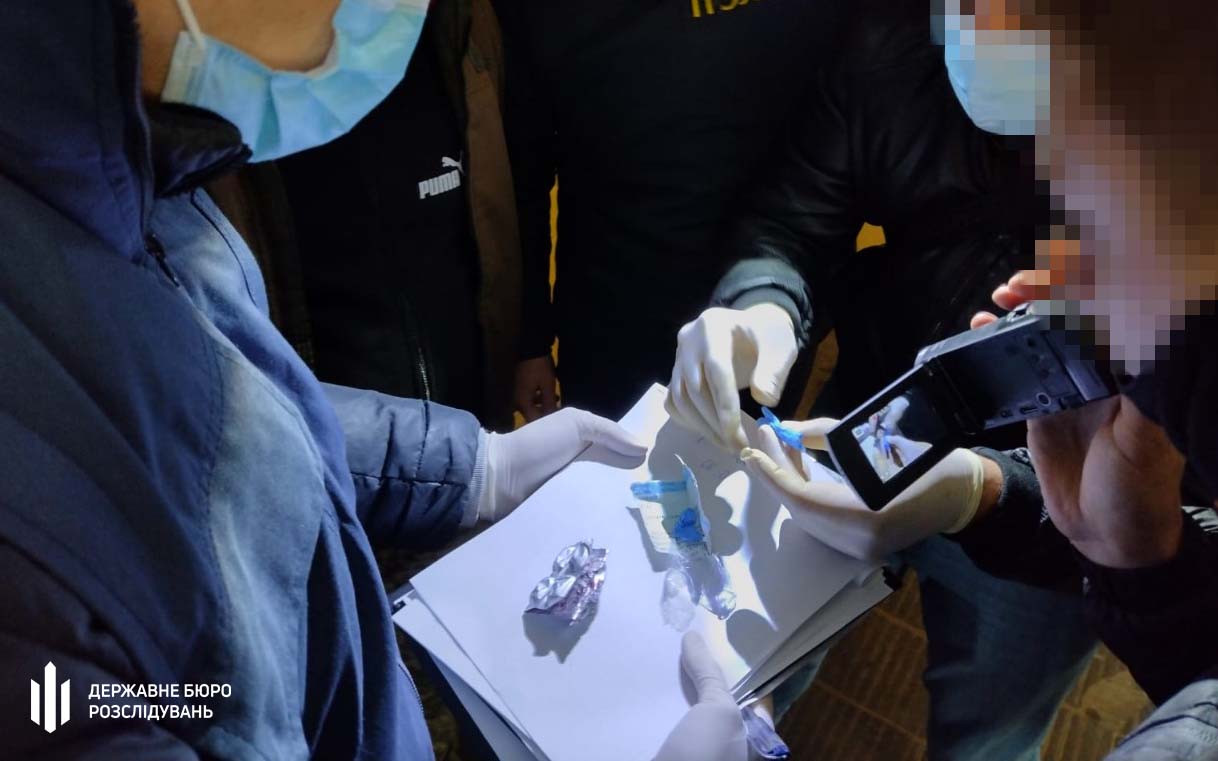
…More than four years have passed. After the SBI's triumphant public announcements about dismantling an organized drug trafficking ring, law enforcement has yet to publish a single update on the conviction of any of its alleged members.
So we started digging to find out what had actually happened to the case.
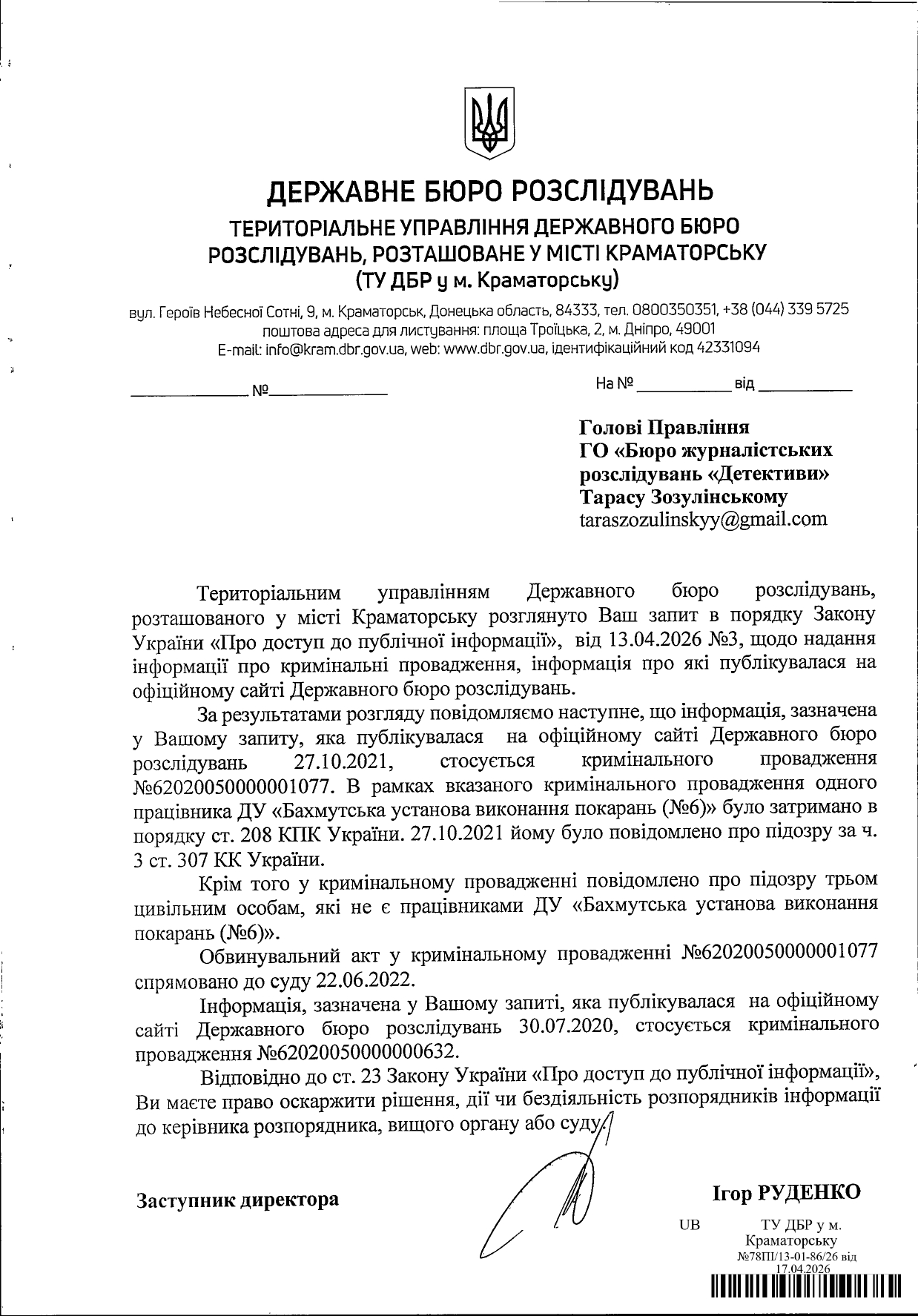
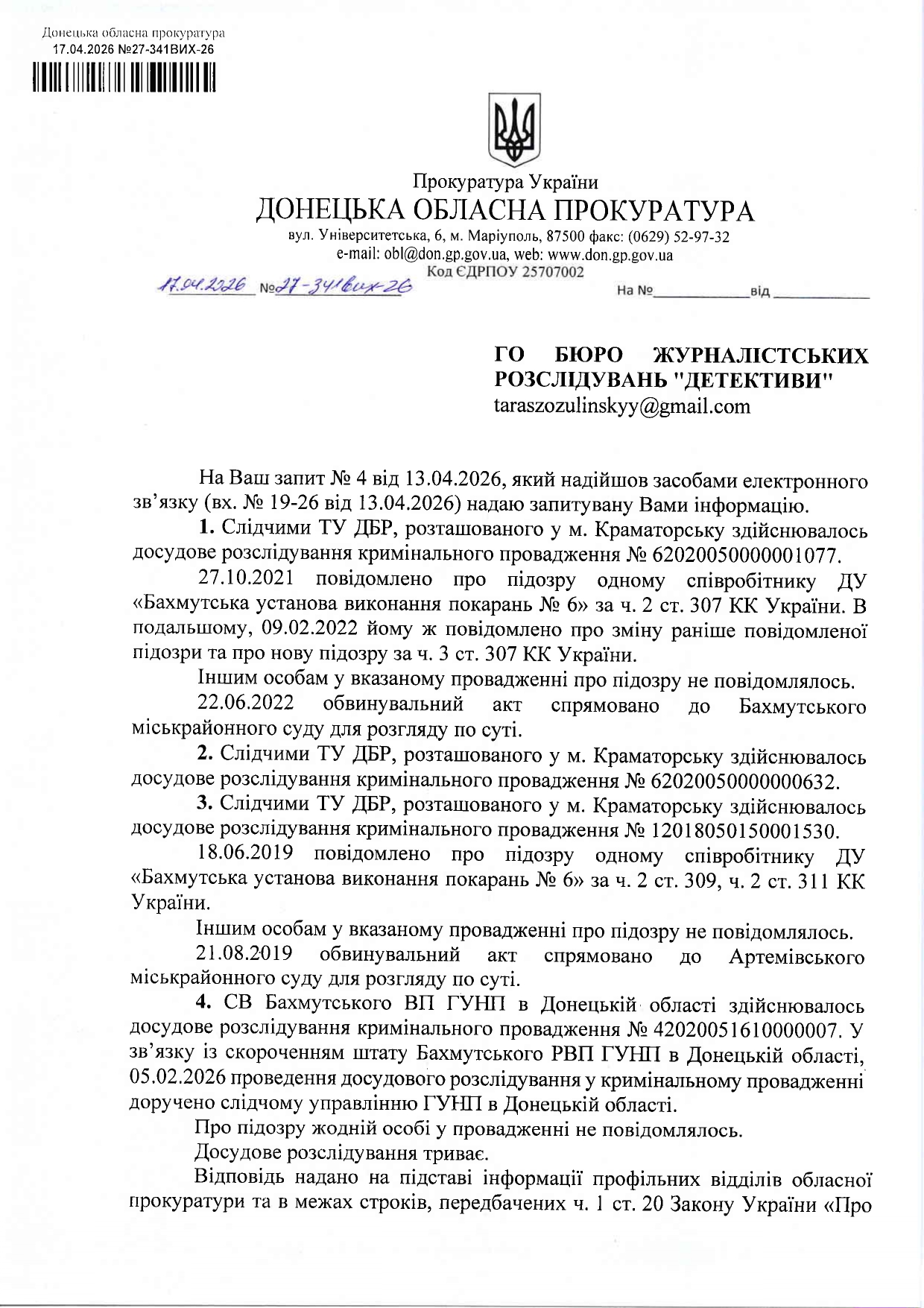
In response to our initial inquiries, both the Donetsk Regional Prosecutor's Office and the Kramatorsk Territorial Office of the SBI gave virtually identical replies: everything was supposedly in order. A notice of suspicion had been served, the pre-trial investigation had been completed, and the indictment had been forwarded to the court. The law enforcement authorities probably thought that would be the end of the matter as far as we were concerned.
So we thoroughly began examining all the information on the case in the Unified State Register of Court Decisions.
What intrigued us was not even the fact that the criminal proceedings are already being heard by the fourth district court in succession. There is a war, and territorial jurisdiction is being changed. That is understandable.
But we noticed that the indictment, the referral of which to the court both the prosecutors and the SBI had "boasted" to us about, concerns only three individuals. And then something didn't add up. After all, there had been one detention center employee under suspicion and three inmates. So, from the indictment—and, accordingly, from the criminal proceedings being heard in court—one member of the organized group had somehow vanished.
We check the "Judicial Authority" portal. We find those whose case has been sent to court—Andrii Sh., Viktor P., and Anton O. We analyze their previous criminal exploits and discover that all of them had already been convicted before our drug trafficking case. And that indicates that there is no detention center employee among them. After all, a previously convicted person could not have been hired to work at a penal institution.
That's interesting. So where did the prison officer disappear to from the criminal proceedings?
And we manage to find a court ruling from which we learn that one of the suspects in the case had left the country as early as April 21, 2022 (two months before the indictment was referred to the court).
So we keep bombarding the law enforcement agencies with requests. Backed into a corner, they finally confirm to us that it was the detention center employee who had fled Ukraine. The SBI wrote that the materials of the criminal proceedings concerning him have been separated into a distinct proceeding, which has been suspended due to the search for the inspector. And the search is still ongoing.
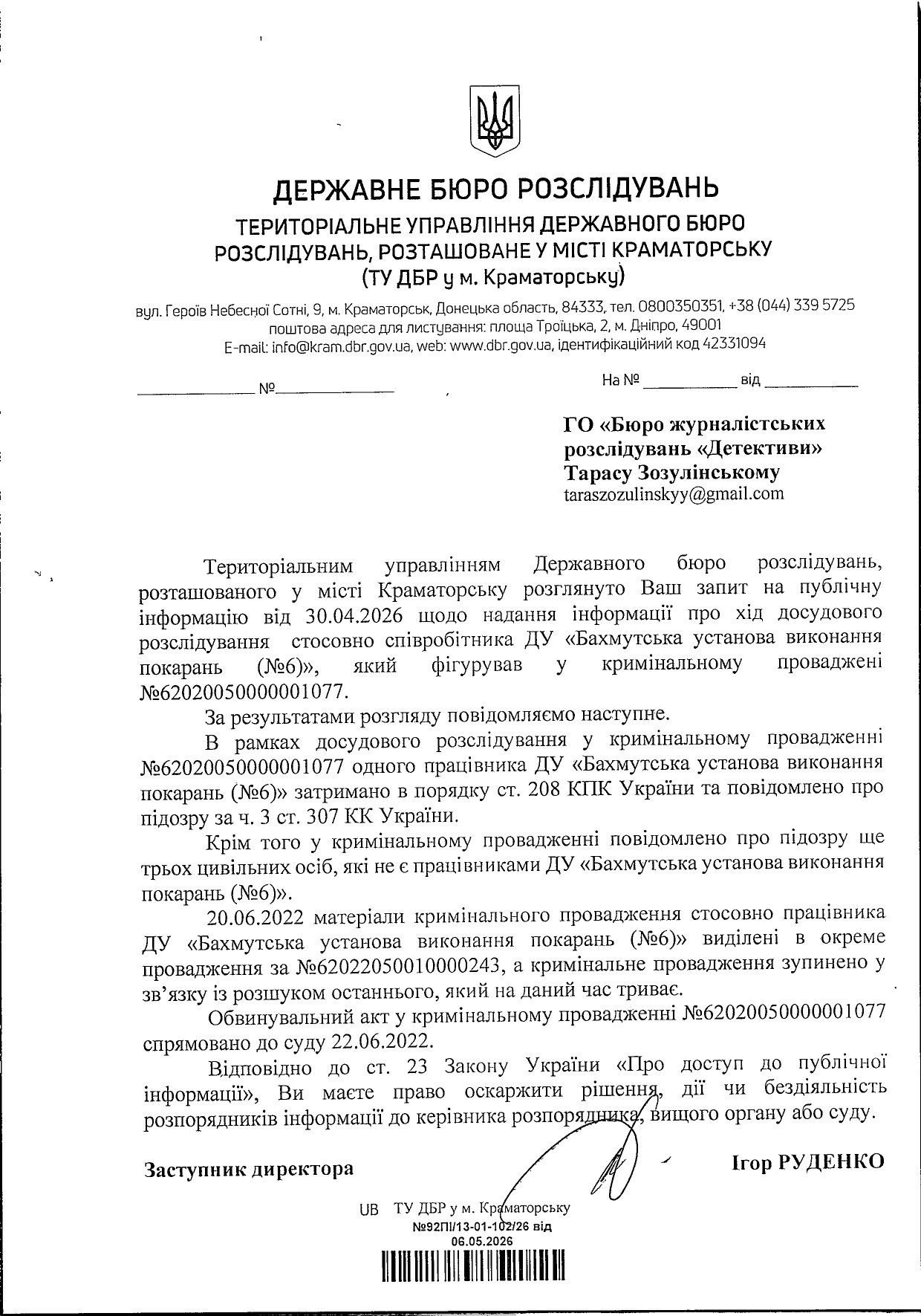
Well, that is what the SBI wrote—that the search is ongoing. We did not believe it. So we checked.
And we want to share with our readers that our law enforcement and judicial system is home to quite a few comedians. Because do you know where they are searching for a person who has left Ukraine and is no longer on the territory of our country? That's right. They are searching for this fugitive... in Ukraine. Not through Interpol, not through international bodies or the competent authorities of foreign states. No Red Notice has been issued for Yevhen Rubtsov.
And all because, the prosecution authorities have not even managed to apply to the international body responsible for carrying out actions related to placing individuals on the international wanted list. So, the detention center inspector is not wanted abroad. And that is despite the fact that more than four years have passed since he left the country.
Meanwhile, the prosecution keeps up the appearance of being hard at work in this matter and keeps passing the ball back and forth with the judges. It is already the third match.
To put it simply, the prosecutors applied to the court to obtain a ruling imposing a preventive measure in the form of pre-trial detention for the detention center inspector. They explain that, by their prosecutorial resolution, they declared him internationally wanted on November 11, 2025, and that they therefore need such a ruling in order to apply to Interpol.
The judge has already refused them three times. And in black and white, the judge explained that a resolution issued by Ukrainian prosecutors is not an act that automatically confers the status of a person being internationally wanted.
The judge of the Shevchenkivskyi District Court of Dnipro pointed out that the prosecutors have not provided a single piece of evidence showing that they have applied to the international bodies authorized to place a person on the international wanted list.
In other words, the prosecution is trying to obtain a court ruling ordering the inspector's detention, claiming that it is one of the documents they need and they cannot apply to Interpol without it. After all, they insist, they have already declared the man internationally wanted by their own resolution.
But the judge tells them that they can put that little piece of paper declaring him internationally wanted in a frame and hang it on the wall.
Because there is a clear procedure for initiating the process of placing a person on the international wanted list.
Under the Rules of INTERPOL, the authority empowered to declare a person internationally wanted is the INTERPOL General Secretariat, upon receipt of the relevant documents.
A notice declaring a person wanted is published in the form of a so-called notice. A person acquires the status of being "internationally wanted" only after a Red Notice has been issued in respect of them.
In other words, the court's position is that Ukrainian prosecutors must apply to INTERPOL first. Only then they should go to a Ukrainian court to obtain a detention order.
The judge dismisses the prosecutors' motion. They appeal and lose.
Afterwords they go back to the court of first instance. Same story all over again.
Now, for the third time around, the court has dismissed their motion.
Finita la commedia. The Prosecutor's Office does not apply to INTERPOL, but if anything goes wrong—hey, don't look at us, it's all the court's fault. They're the ones to blame. No one is looking for for the detention center inspector abroad. Curtain.
III.
Crime within the ranks of the State Criminal-Executive Service of Ukraine has been on the rise for the fourth consecutive year

550 people who committed criminal offences. That is how many employees of the State Criminal-Executive Service of Ukraine (SCES) have been identified in Ukraine as having committed crimes since 2021. We received data from the Office of the Prosecutor General showing an increase in crime within the penitentiary system.
And this is despite the fact that the number of convicted persons and detainees has decreased significantly. While in 2022 there were 48,251 such persons, by the beginning of 2026 that figure had fallen to 34,925.
The number of prisons is decreasing. The number of prisoners is decreasing. Meanwhile, crime within the ranks of the SCES is increasing year after year.
In 2022, law enforcement agencies identified 79 SCES employees who had committed criminal offences. In 2023, the number rose to 87. In 2024, it reached 123. In 2025, it increased even further to 135. And in the first quarter of 2026 alone, the figure already stands at 43.
IV.
Despite the ECtHR's finding of ill-treatment, those responsible at Zamkova Correctional Colony No. 58 have not been held accountable
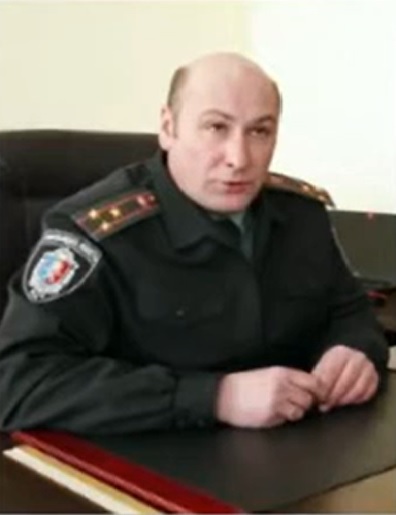
The then Head of Zamkova Correctional Colony No. 58, Oleksandr Novosiadlov, was never held accountable and is serving as Deputy Head of the Khmelnytskyi Pre-Trial Detention Centre now.
On 8 March 2023, the judgment of the European Court of Human Rights in "Yakovlyev v. Ukraine" became final. The Court found that Andrii Yakovlyev had been subjected to inhuman treatment at Zamkova Correctional Colony No. 58.
The ECtHR established that the force-feeding of a prisoner who had gone on a hunger strike in protest against the treatment in the correctional colony subjected him to excessive physical force and pain. The European Court found that there had been no convincing demonstration of the medical necessity for force-feeding Yakovlyev, and that the State's response to the prisoners' protests had been limited to force-feeding them.
The ECtHR also based its judgment on the fact that no investigation had been conducted into the underlying causes of the prisoners' protests and that no reasoned response had been provided to their complaints.
And how did the State respond after the European Court had established that Andrii Yakovlyev had been subjected to ill-treatment?
One of the prisoners at Zamkova Correctional Colony No. 58, Ruslan Ihlin, who is serving a life sentence, submitted a request to the Ministry of Justice of Ukraine regarding this matter.
In its reply, the Ministry of Justice clearly explained the procedure for the subsequent steps provided for by law:
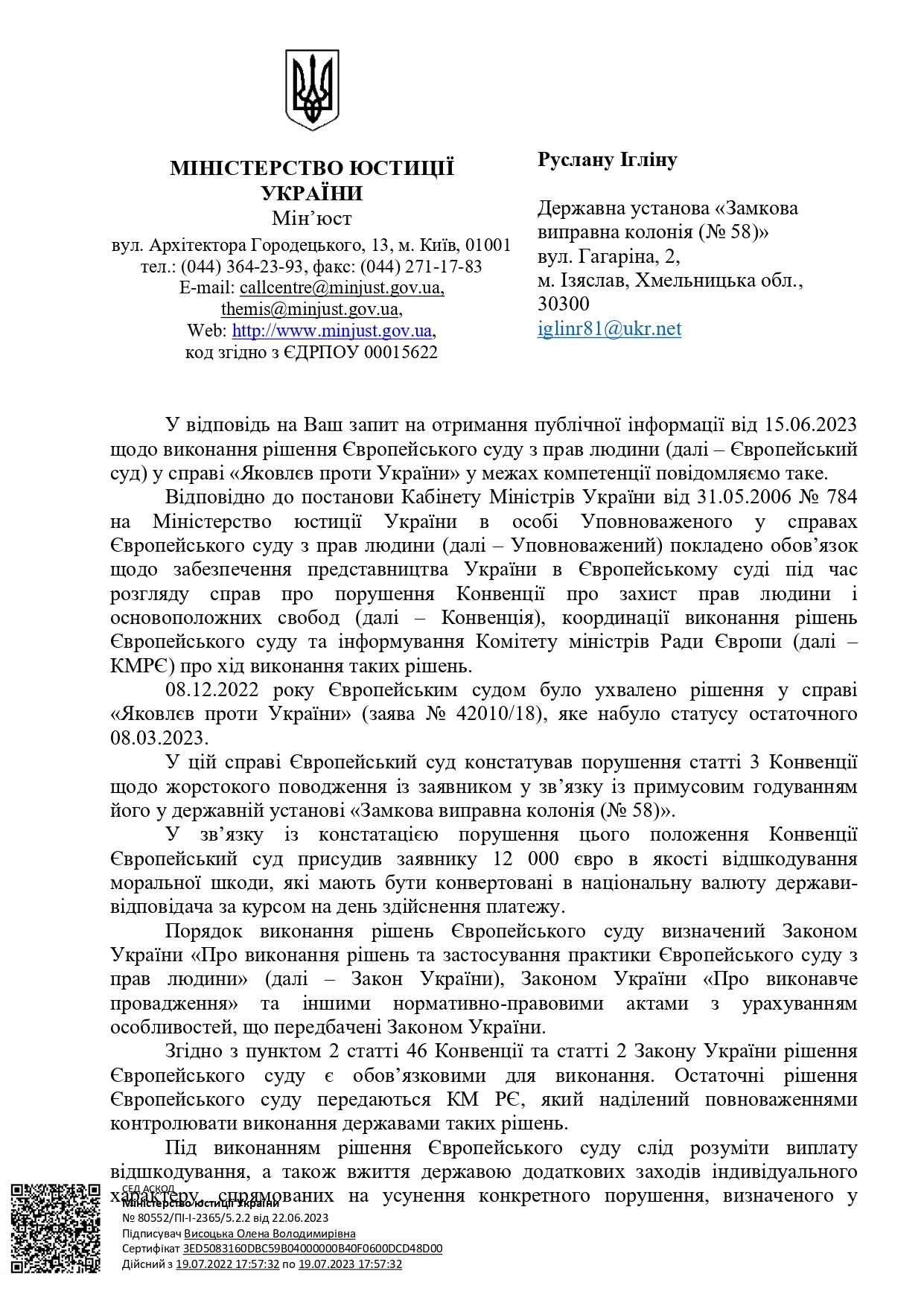
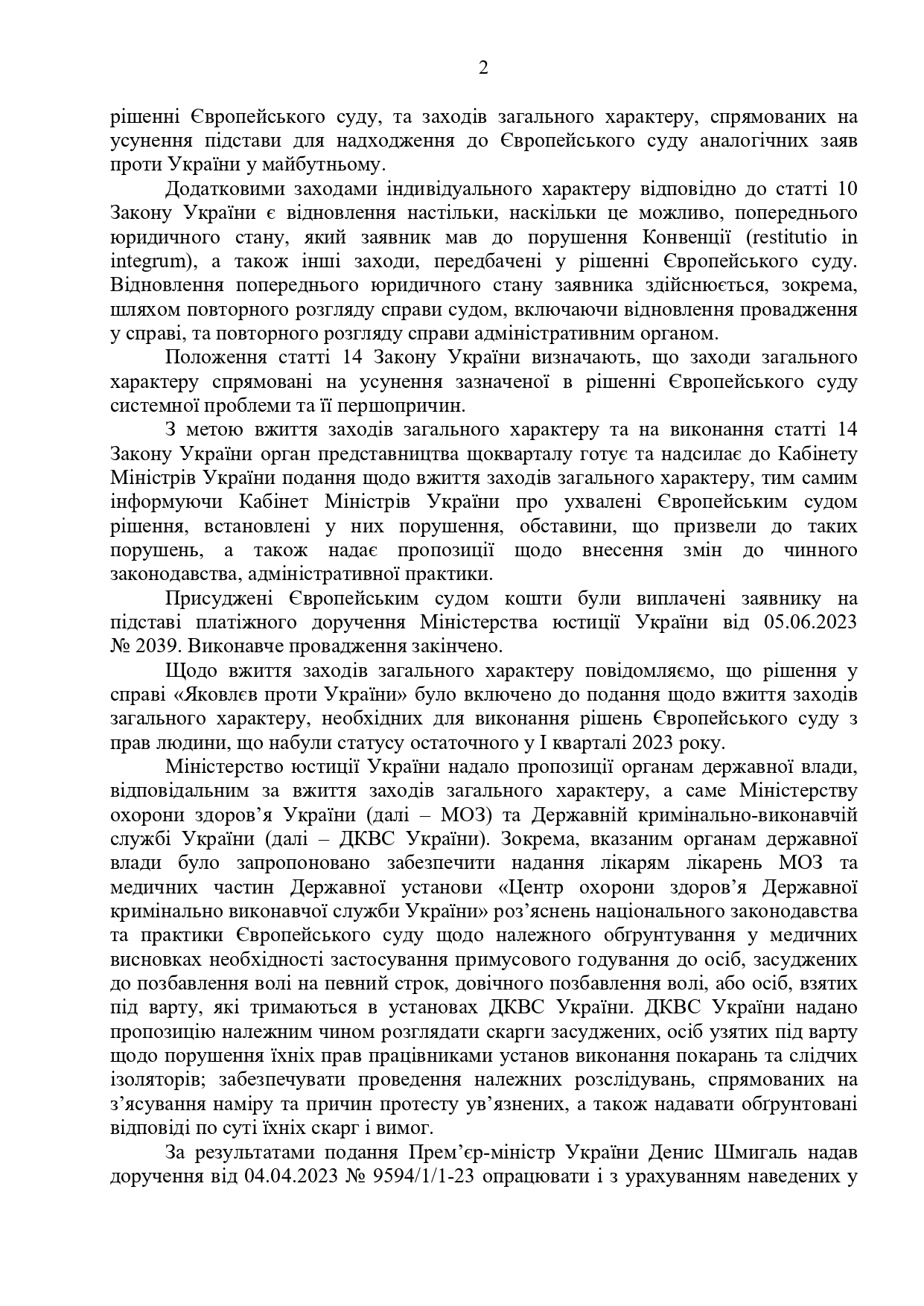
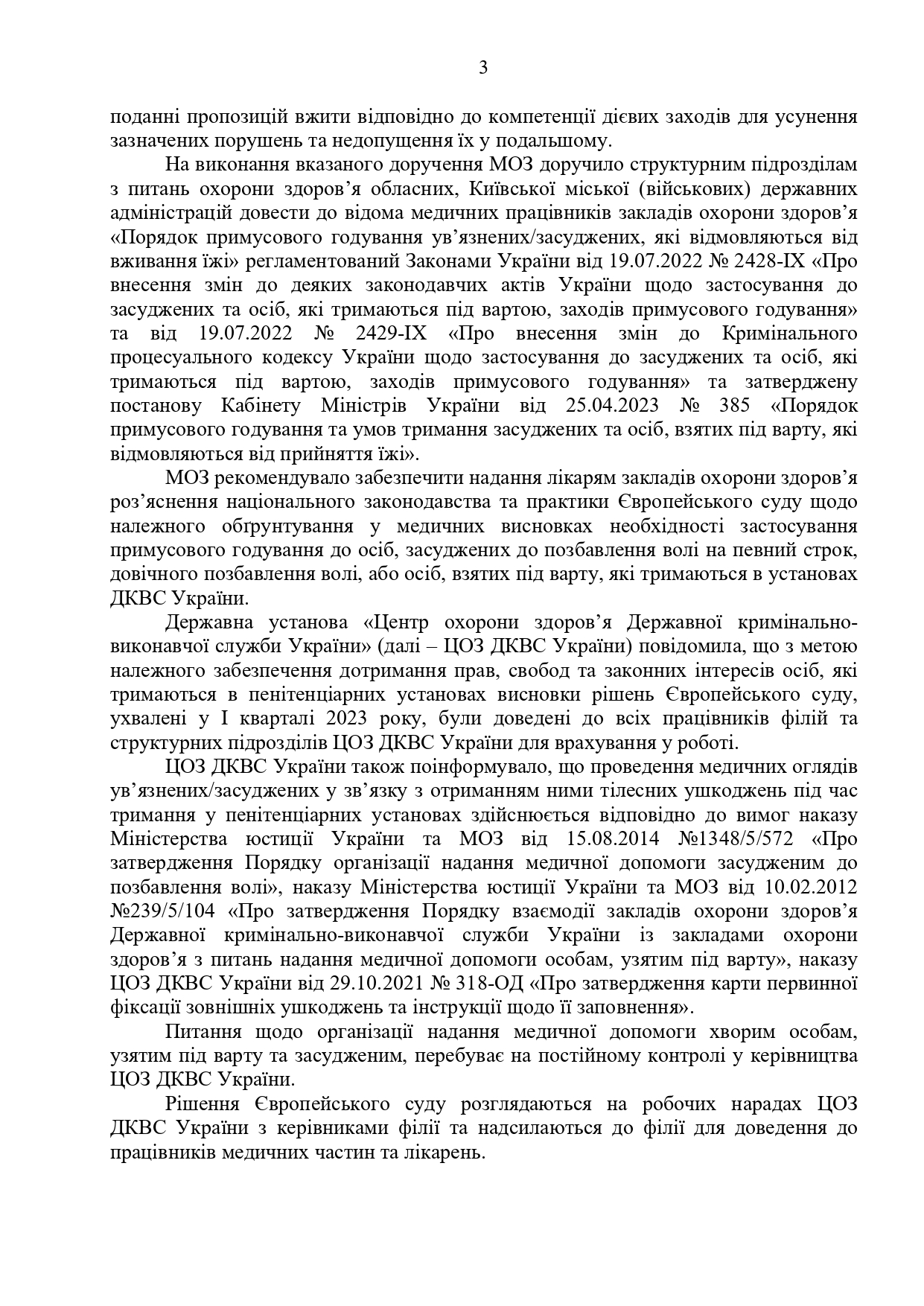
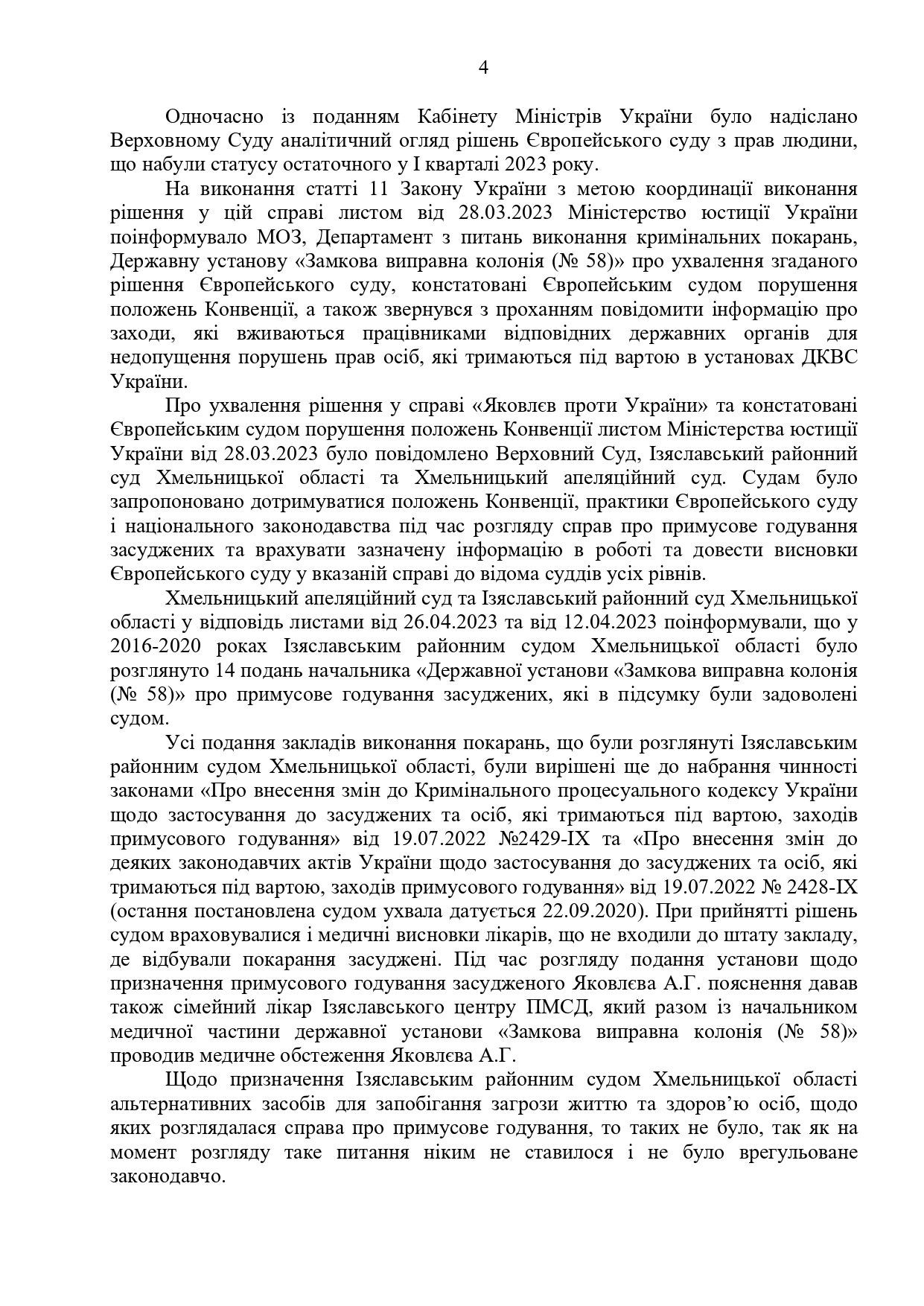
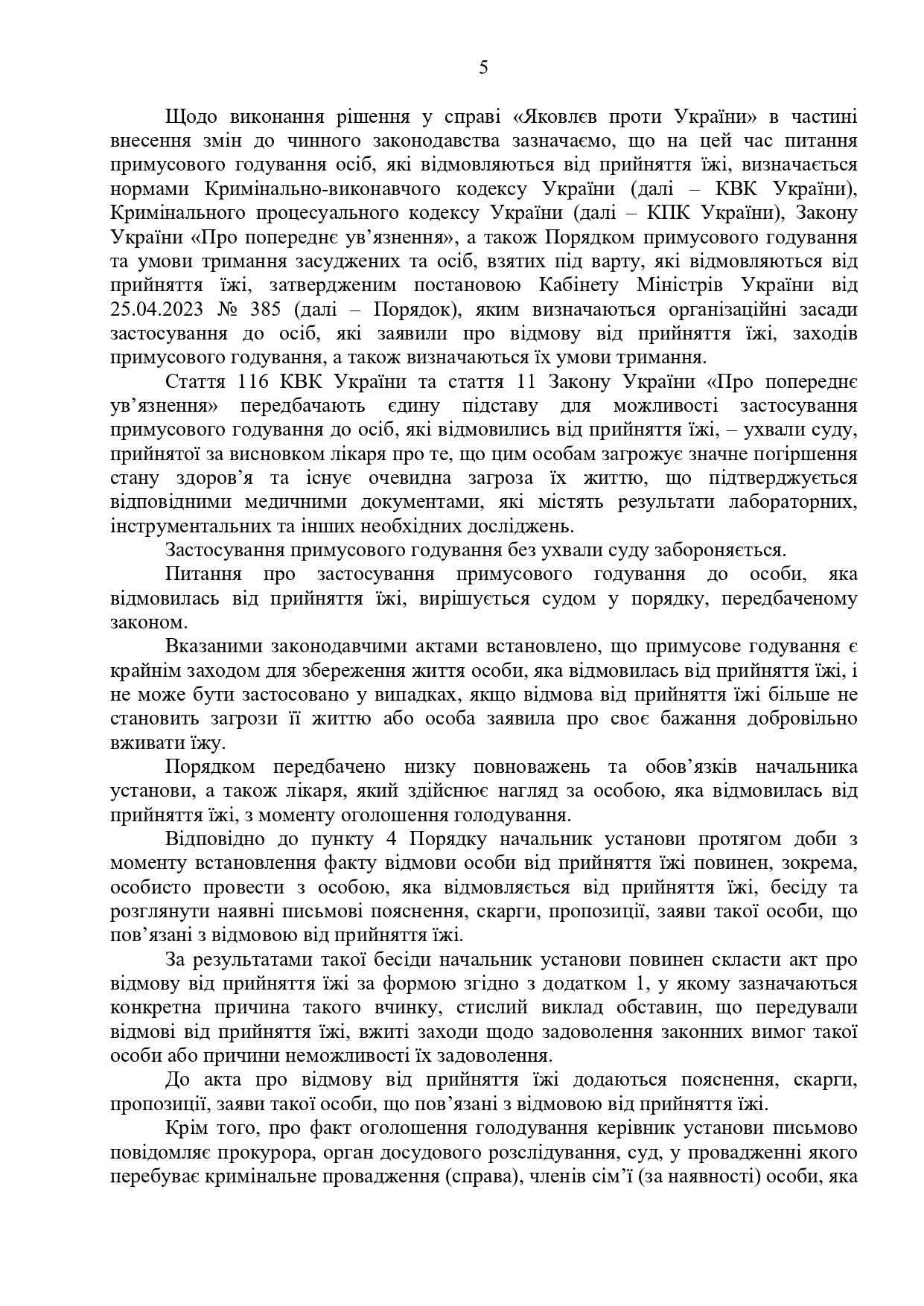
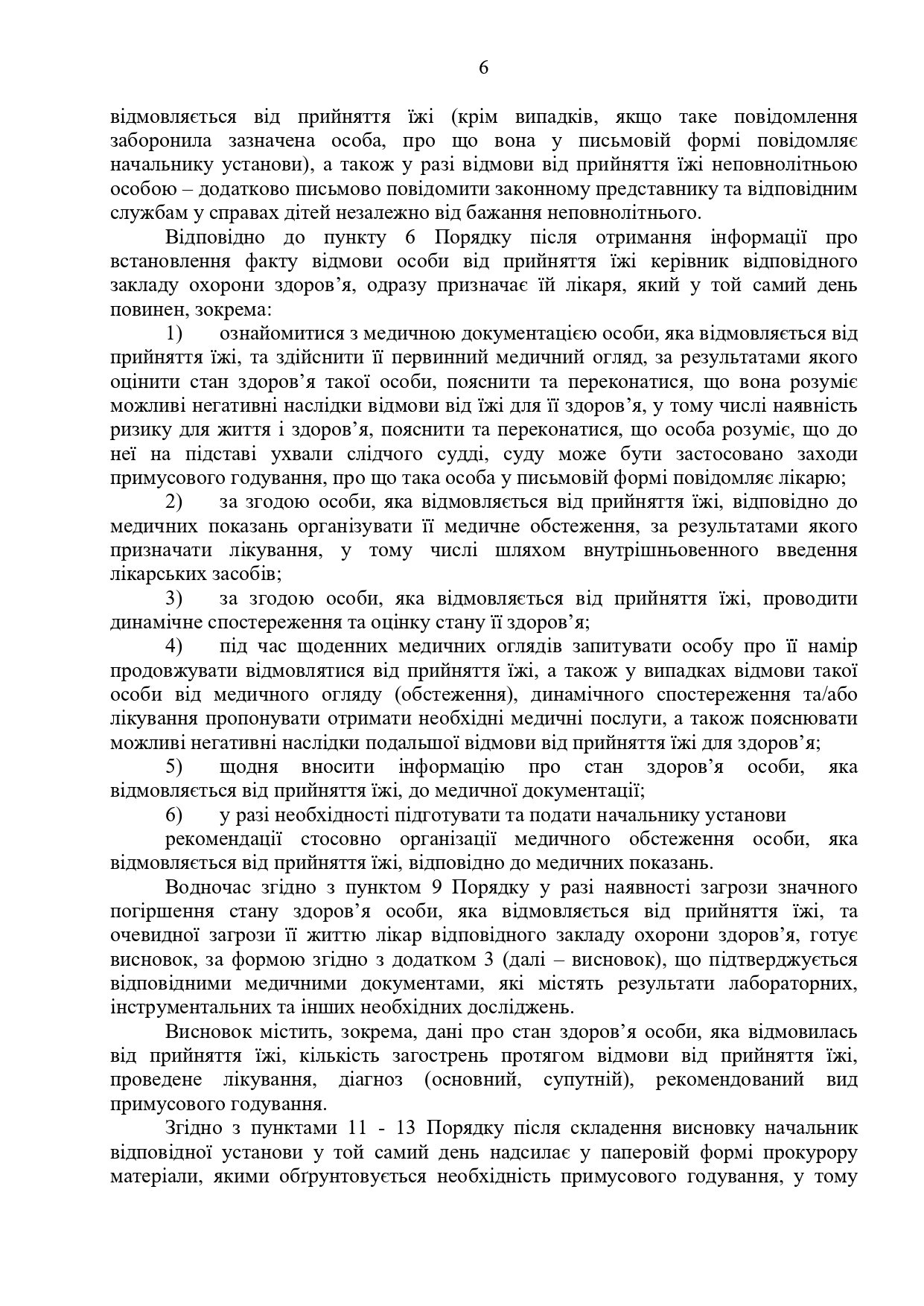
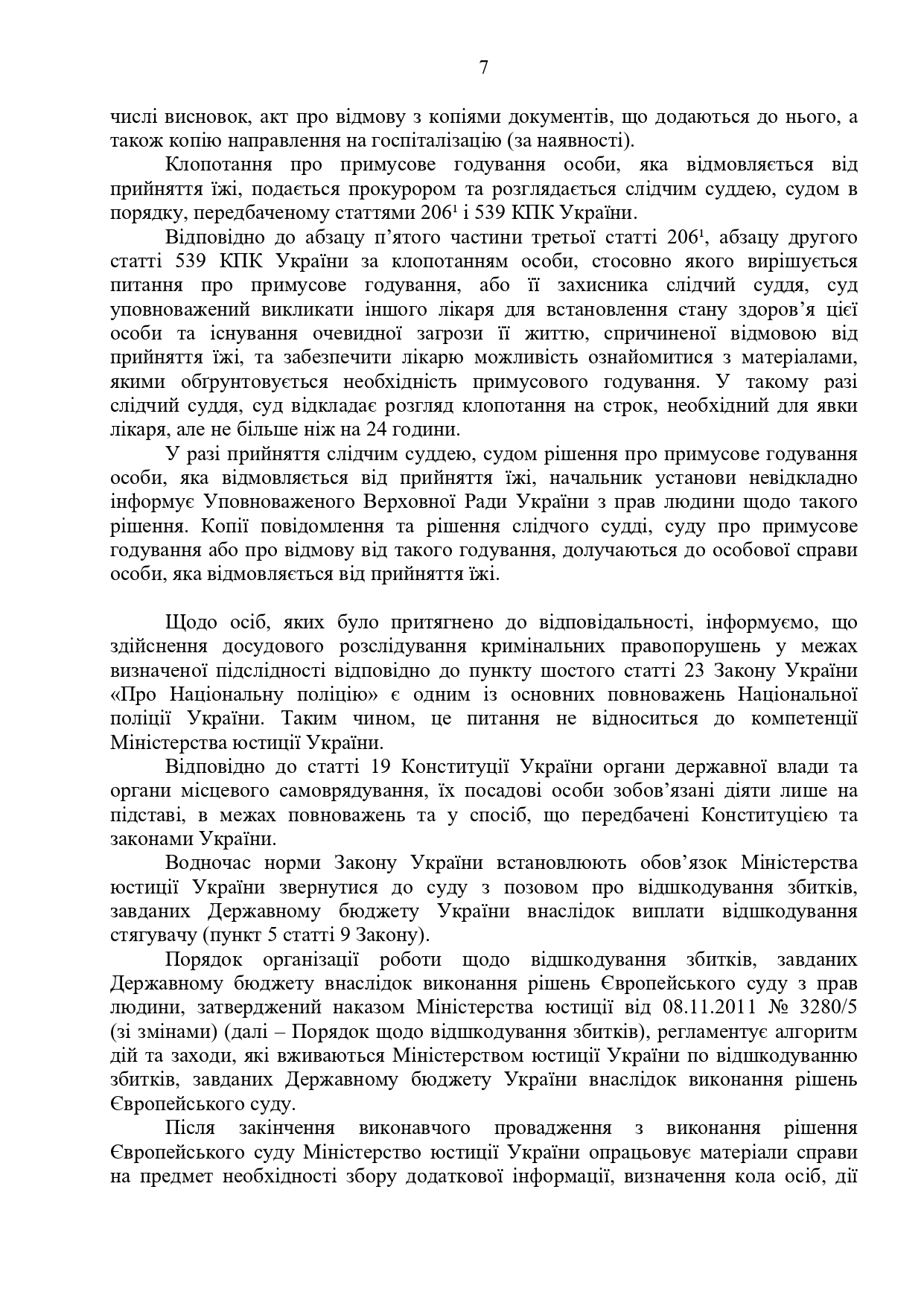
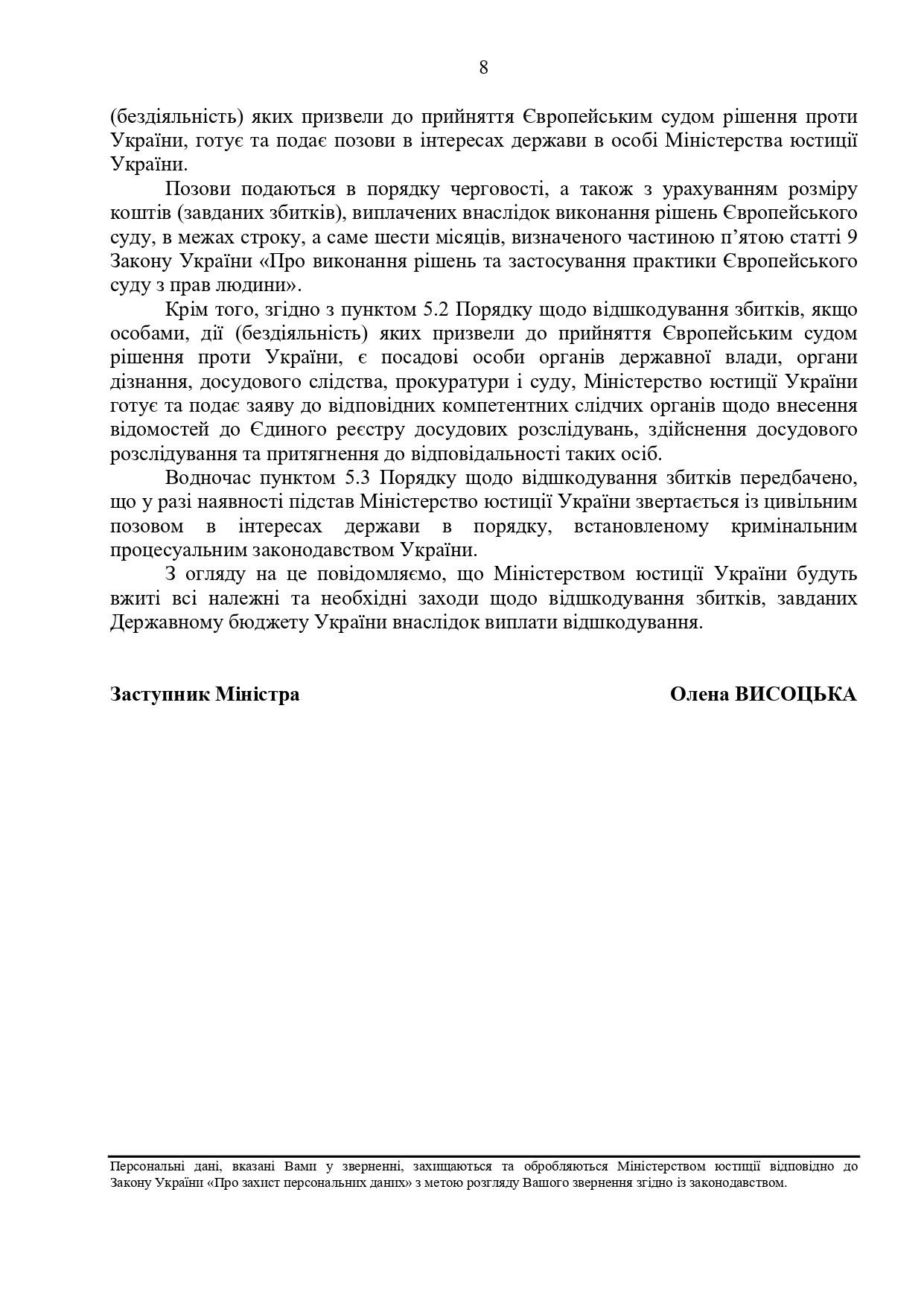
"The provisions of the Law of Ukraine impose an obligation on the Ministry of Justice of Ukraine to bring a claim for compensation for the losses incurred by the State Budget of Ukraine as a result of the payment of compensation to the applicant.
The Ministry of Justice of Ukraine reviews the case materials to determine whether additional information needs to be collected, identifies the persons whose actions led to the European Court's judgment against Ukraine, and prepares and files claims on behalf of the State, represented by the Ministry of Justice of Ukraine.
If the persons whose actions led to the European Court's judgment against Ukraine are officials of state authorities, the Ministry of Justice of Ukraine prepares and submits a application to the competent investigative authorities for entering information into the Unified Register of Pre-Trial Investigations, conducting a pre-trial investigation and bringing such persons to justice," the Ministry of Justice stated.
In other words, after identifying the persons whose actions led to the European Court's judgment against Ukraine, the Ministry of Justice of Ukraine should have initiated proceedings to recover from them the losses incurred by the State Budget of Ukraine.
The ECtHR awarded Andrii Yakovlyev EUR 12,000 in respect of non-pecuniary damage.
Obviously, the State should have made efforts to recover those funds from the individuals whose actions resulted in the inhuman treatment of the convicted prisoner.
In addition, the Ministry of Justice should have submitted a application to the law enforcement authorities seeking to have those responsible held accountable.
None of these legal mechanisms provided for by law was applied by the Ministry of Justice of Ukraine.
As a result, the then Head of Zamkova Correctional Colony No. 58, Oleksandr Novosiadlov, was never held accountable and is serving as Deputy Head of the Khmelnytskyi Pre-Trial Detention Centre now.
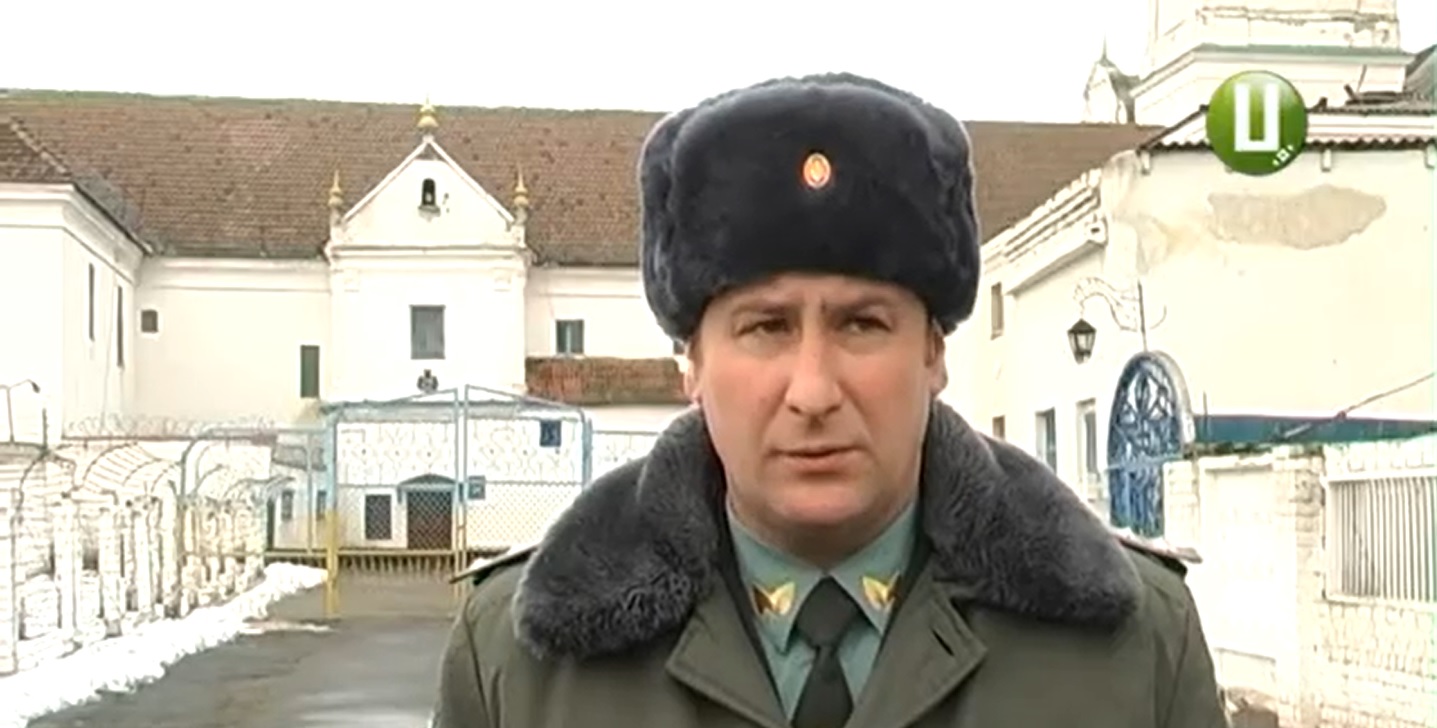
Zamkova Correctional Colony No. 58 is located in a former monastery built in the seventeenth century.
The ECtHR established that in December 2014, December 2016, and May 2017, its prisoners repeatedly went on hunger strikes in protest against what they alleged were inadequate conditions of detention.
In December 2016, four prisoners were subjected to force-feeding.
The case examined by the European Court concerned the events of January and February 2018. At that time, at least ten convicted prisoners went on a hunger strike. One of them was Andrii Yakovlyev.
He began his hunger strike on 22 January. Just two days later, he submitted a written statement to the Head of the colony: "I refuse to consume any food in protest against the unlawful actions of the colony administration in connection with the systematic and deliberate violation of my constitutional rights," Andrii Yakovlyev stated.
The very next day, the convicted prisoner was placed in a disciplinary isolation cell on the grounds that he had "categorically refused ... to clean the exercise yards." Yakovlyev, however, maintained that the real reason was to suppress any form of protest in the correctional colony.
It is also worth noting that, in this case, the prisoners generally resorted to hunger strikes towards the end of their prison terms (on average between six months and two and a half years before the completion of their sentences). At the same time, the convicted prisoners in respect of whom applications for force-feeding orders were considered had been sentenced to terms of imprisonment ranging from eight to fourteen years.
The prisoners went on hunger strike in order to draw public attention to the conditions of detention in this correctional colony.
On 29 January, the Head of the colony's medical unit stated in his medical opinion that Yakovlyev faced a risk of permanent damage to his health and that there was an imminent threat to his life: "I consider it necessary, in order to preserve his life and health, to prescribe force-feeding."
On 30 January 2018, the Head of the correctional colony, Oleksandr Novosiadlov, applied to the Iziaslav District Court for an order authorising the applicant's force-feeding. The application was granted on 31 January.
Novosiadlov also filed similar applications with respect to the other nine convicted prisoners.
On 31 January 2018, the Iziaslav District Court, on similar grounds, also ordered the force-feeding of three other prisoners of Zamkova Correctional Colony who had been on hunger strike since 22 January 2018. In early February 2018, it issued similar orders in respect of six more hunger-striking prisoners from the same correctional colony.
So, what did the judges of the ECtHR find?
First of all, the Head of the colony's medical unit informed the court that Yakovlyev did not require hospitalisation.
Another no less important point was that the convicted person appeared before the court of his own accord.
Thirdly, Yakovlev objected to the imposition of force-feeding. He stated that although he felt unwell, there was no objective evidence indicating any deterioration in his health.
Taken together, the above-mentioned circumstances, in the ECtHR's view, demonstrated that the existence of a medical necessity for force-feeding had not been convincingly established.
The Court noted that, as acknowledged by the national authorities, inmates of Zamkova Correctional Colony had for years lodged well-founded complaints about violations of their rights by the colony administration, but to no avail. In those circumstances, the hunger strike initiated by Yakovlev together with other inmates on 22 January 2018 could indeed be regarded as a form of protest prompted by the absence of any other means of drawing attention to their demands.
The Court concluded that the State had failed to deal adequately with the situation arising from Yakovlev's hunger strike and had subjected him to ill-treatment in breach of Article 3 of the Convention (Prohibition of Torture).
Andrii Yakovlev described the force-feeding procedure as follows: his hands were handcuffed behind his back, and he was restrained by several correctional colony officers. One of the officers, using physical force, inserted a special rubber tube deep into his throat, causing Yakovlev severe pain and making him choke. The entire procedure lasted from thirty to ninety minutes.
...Neither the head of the colony's medical unit nor the then governor of Zamkova Correctional Colony No. 58, Oleksandr Novosiadlov, was held liable for these actions.
The Ministry of Justice did not submit the relevant applications to the law enforcement authorities and did not initiate proceedings to recover from those responsible the EUR 12,000 in damages paid from the State Budget of Ukraine.
V.
One, two, three—to the Kidneys: where beatings behind bars are most common
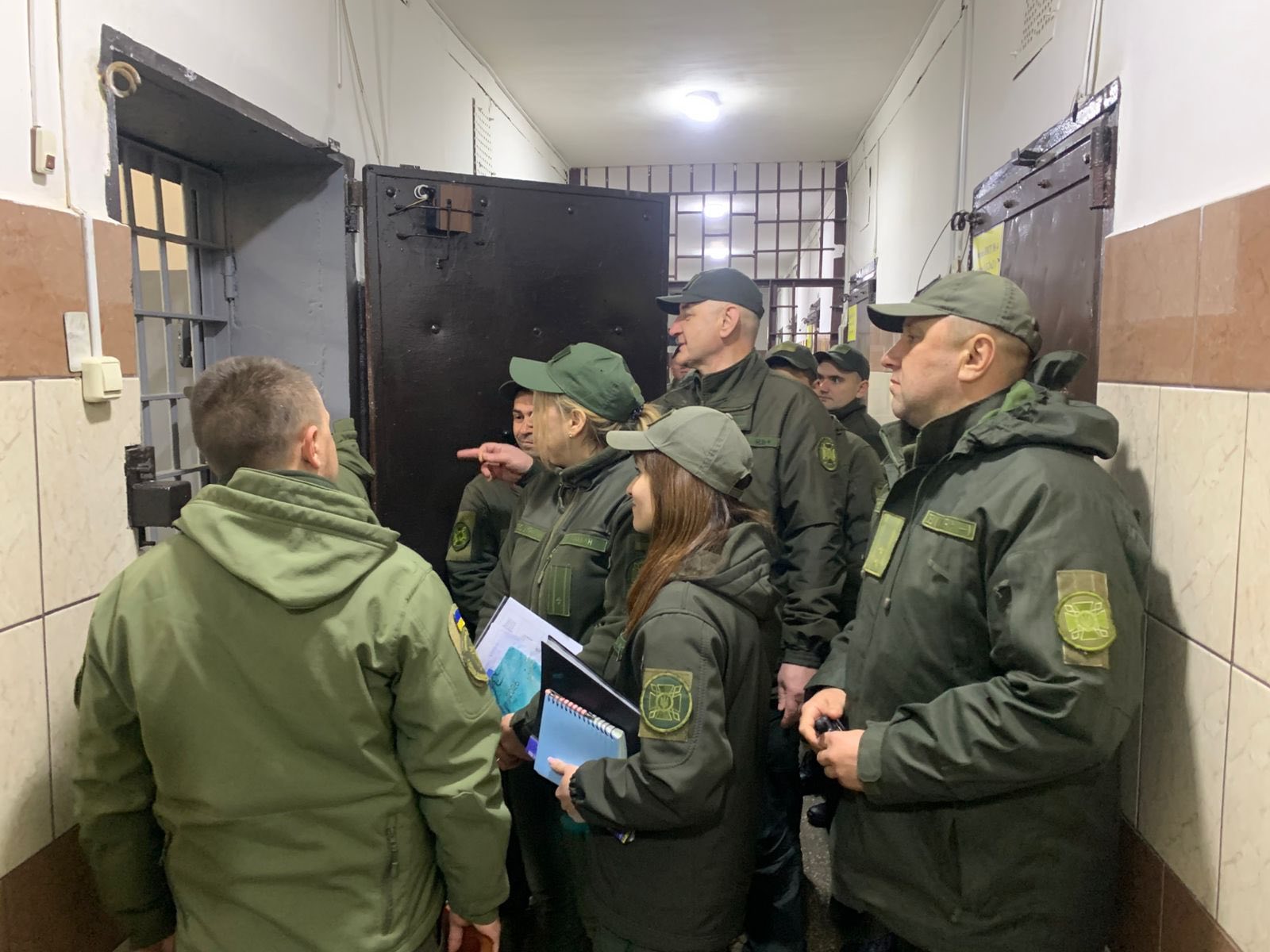
Join the effort to reform the penitentiary system—become a Senior Inspector for the Protection of Prisoners' Rights and the Prevention of Torture!
— urges the State Criminal-Executive Service of Ukraine on its official information platforms.
They took up the posts, joined the effort, made a difference. Eighty-five staff positions have been allocated for this year. They work tirelessly. They receive complaints from prisoners. They attend training sessions. They report on their activities with photos on social media.
At the same time, the number of documented bodily injuries sustained while in the custody of the State Criminal-Executive Service continues its steep rise with unwavering consistency.
Meanwhile, as the number of beatings behind bars continues to grow, the State reports on the implementation of European standards and democratic approaches in efforts to combat ill-treatment in places of detention.
The data we obtained from the State Criminal-Executive Service's Centre for Health Care reveal a deep gulf between the policies pursued by prison officials and the actual results of those efforts.
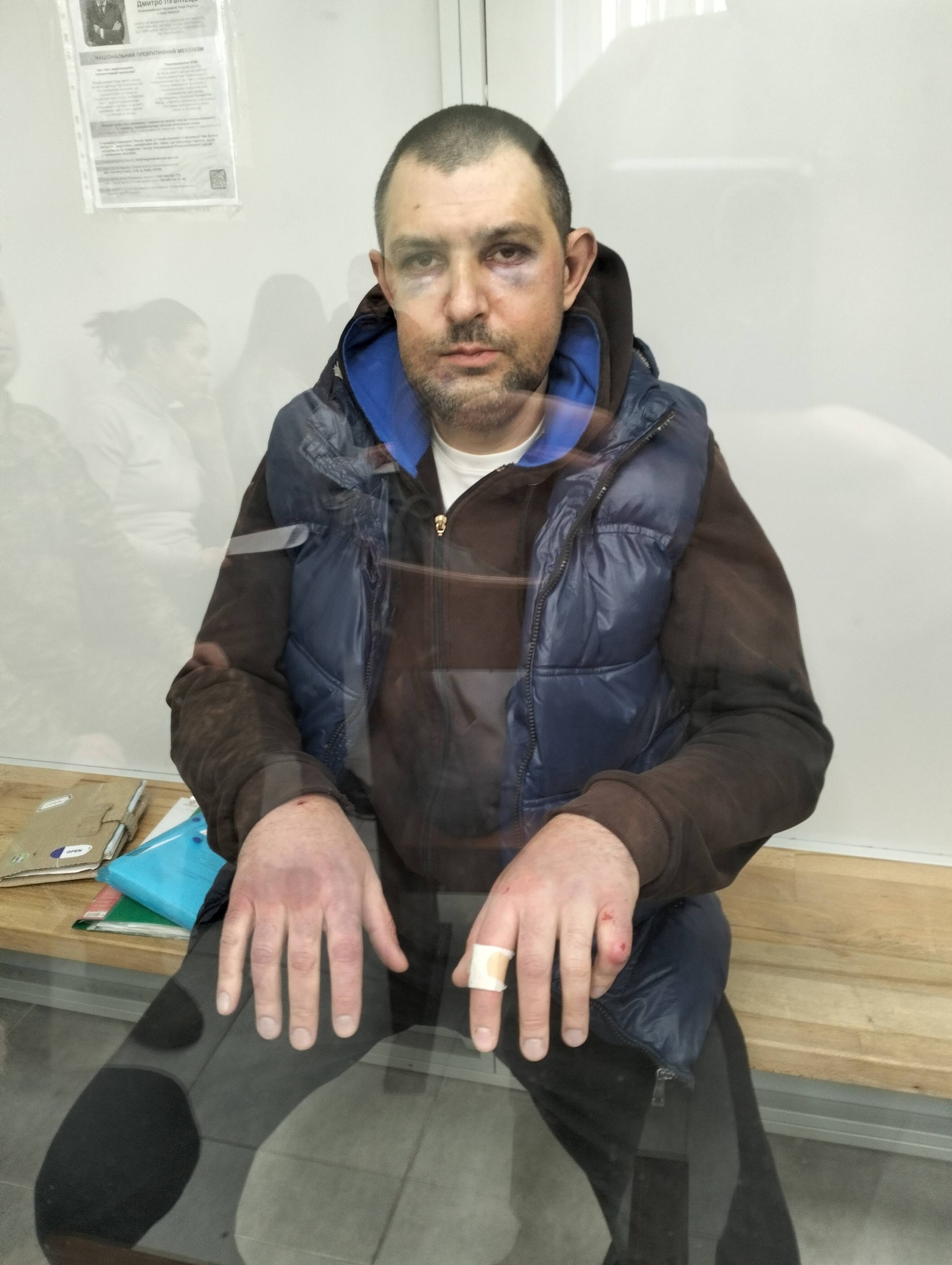

The positions of Senior Inspectors for the Prevention of Torture were introduced in correctional colonies and pre-trial detention centres in 2024.
As of 1 January 2025, 37,119 persons were being held in institutions of the State Criminal-Executive Service. This information was provided by the Department for the Execution of Criminal Sentences in response to our request.
We compared these figures with the data we obtained from prison doctors at the State Criminal-Executive Service's Centre for Health Care.
In 2024, a total of 2,043 cases of bodily injuries were documented. This amounted to 5.5% of the total number of persons held behind bars.
That was 440 more cases than in 2023, when the ratio was 3.6% out of 44,024 detainees and convicted persons. The year preceding the launch of the Senior Inspectors' activities.
In 2025, the number of beatings rose once again. As of 1 January 2026, 34,925 persons were being held behind bars. The number of documented bodily injuries reached 2,431 incidents. That already amounted to 6.7%.
Thus, the State's high-profile efforts to combat physical violence, beatings and torture in places of detention have, as of today, ended in failure.
The level of violence continues to rise, which unequivocally demonstrates the ineffectiveness of the work of the Senior Inspectors responsible for protecting prisoners' rights.
The statistics for the first quarter of 2026 continue to paint an even bleaker picture. A total of 833 incidents of violence were documented, which translates into an annual equivalent of 3,332 incidents. That would amount, no less, to 9.5% of the total number of convicted persons and remand prisoners.
In 2023, the figure stood at 3.6%. In 2026, it may well reach as high as 9.5%.
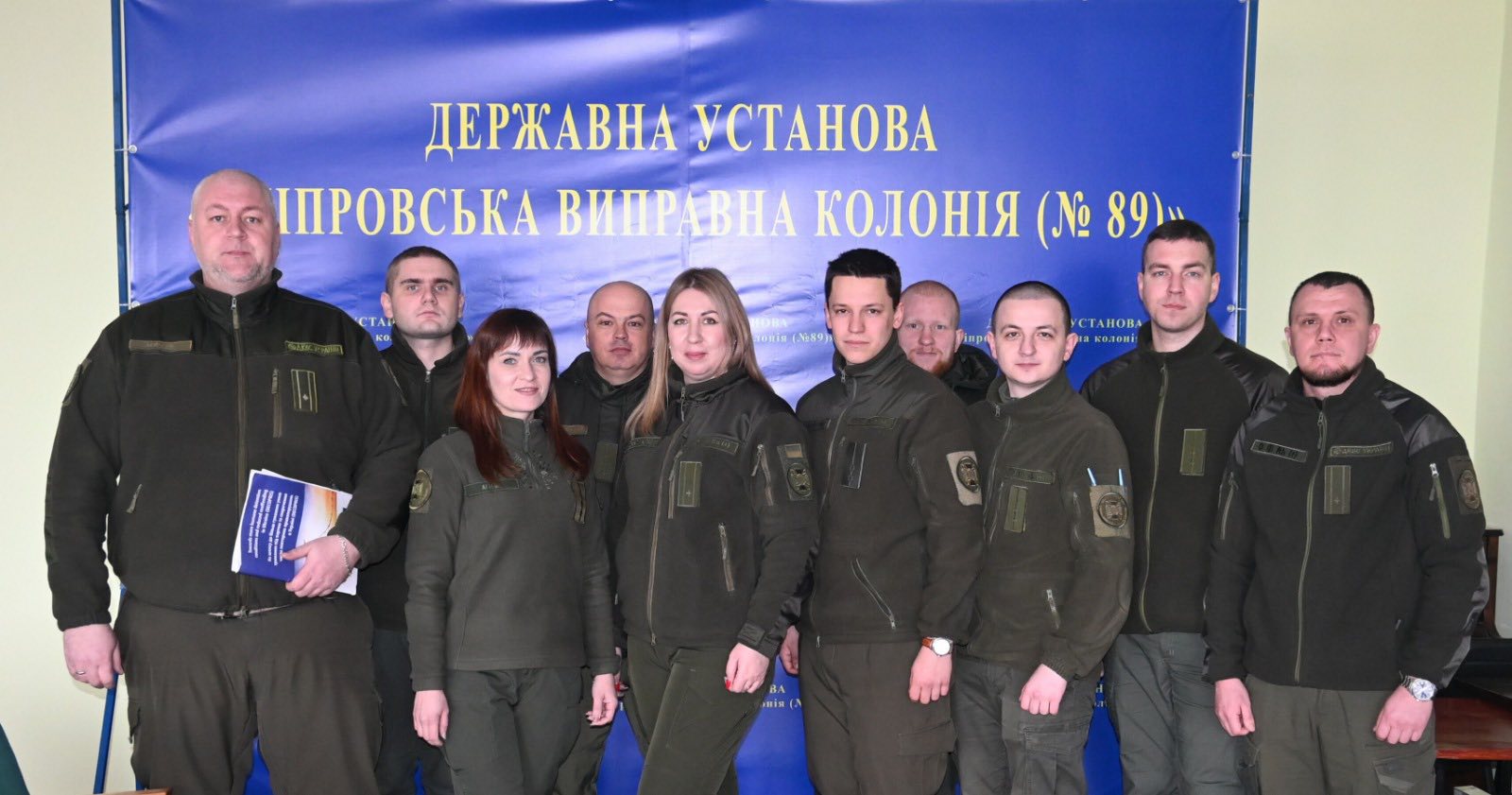
Where Prisoners Are Beaten the Most
A total of 10,016 cases of bodily injuries inflicted while in custody were documented across 80 institutions of the State Criminal-Executive Service between 2021 and 2026.
The Zaporizhzhia Pre-Trial Detention Centre ranks first in the number of prisoners beaten, with 1,663 documented cases. Moreover, violence has been increasing year after year there. While 146 cases of bodily injuries were documented at the detention centre in 2022, the figure rose to 326 in 2023, 371 in 2024, and 437 in 2025. The first quarter of 2026 also shows a further increase. In just three months, 184 cases have already been documented.
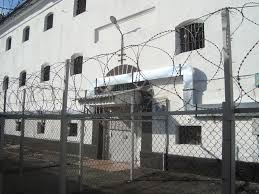
The institution ranking second in the number of documented cases of violence is the Kyiv Pre-Trial Detention Centre, with 836 cases. Likewise, since 2022, their number has been steadily increasing: 19 in 2022, 94 in 2023, and 146 in 2024. In 2025, however, the figure rose sharply to 337 incidents. In the first quarter of 2026 alone, 114 incidents were documented.
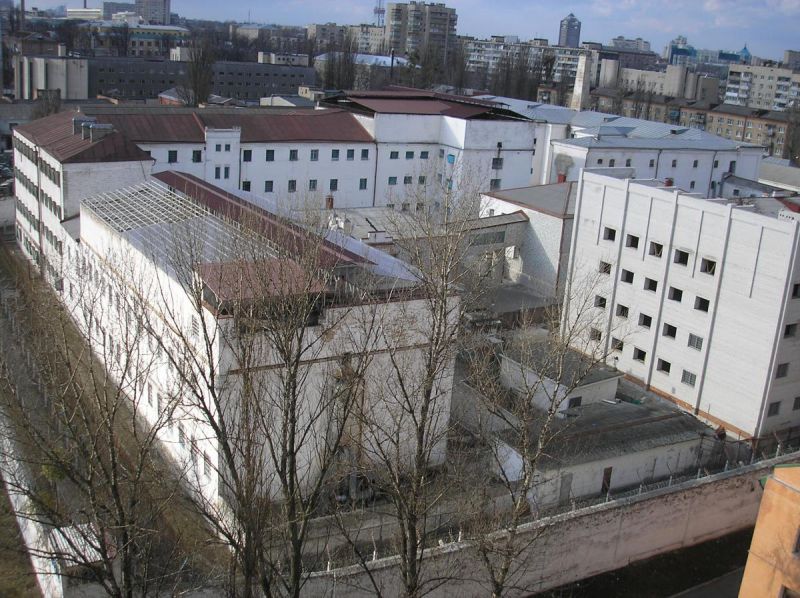
Rounding out the top three is Vinnytsia Penal Institution No. 1, with 707 documented cases.
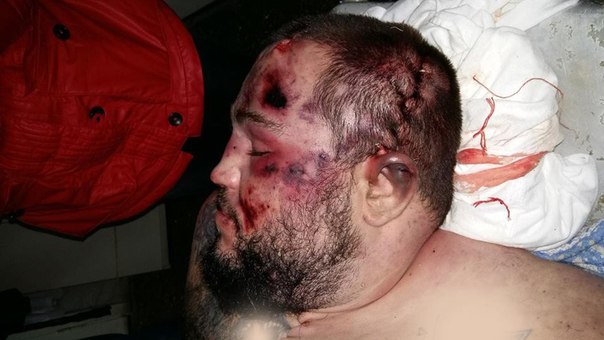
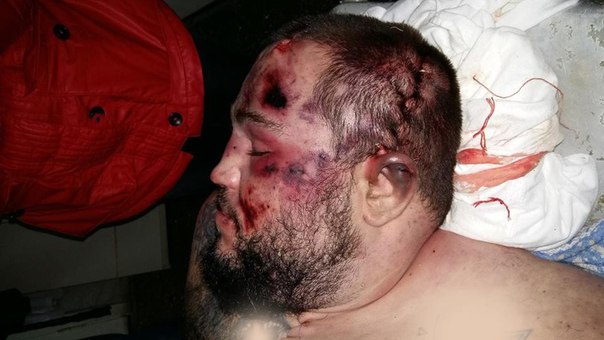
Murder of Andriy Danylyuk in Khmelnytskyi SIZO in 2015. 19 recorded blows to the head. In this case, criminal proceedings against two employees of Zamkova Correctional Colony № 58 were closed at the end of last year due to the statute of limitations.
30.05.2026
Taras Zozulinskyy
The material was prepared within the framework of the project “Promoting the Protection of Human Rights in Ukraine through Human Rights Education and Public Engagement”, funded by the European Union within the framework of the implementation of a sub-grant provided by the Center for Civil Liberties. Its content is the responsibility of the Bureau of Investigative Journalism "Detectives" and does not necessarily reflect the views of the Center for Civil Liberties and the European Union.